Leopard American Football Helmet SVG
A Designer’s First Glance: Bold, Playful, and Unapologetically Niche
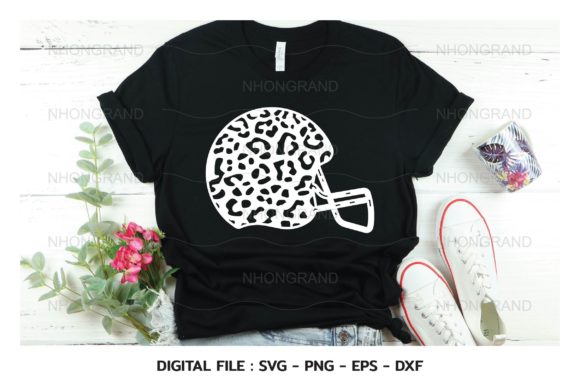
Opening the Leopard American Football Helmet SVG file, I immediately felt the energy — a confident mashup of wild texture and sporty structure. The leopard print wraps the helmet’s curves with rhythmic consistency, not random splatter. It’s not cartoonish, nor overly realistic; it sits in that sweet spot where craft meets character. As an embroidery designer who’s stitched everything from nursery monograms to boutique sweatshirt collections, I recognized this right away: it’s a statement piece, not a background filler. It leans into attitude — perfect for a teen’s custom tote, a coach’s gift apron, or a bold holiday pillow cover for a football-obsessed family.
Where This Design Truly Shines (and Where It Needs Thought)
I tested the Leopard American Football Helmet SVG as the centerpiece for a medium-weight cotton canvas tote bag — a common small shop product and Etsy bestseller. Stitched at 4.5" wide with standard poly thread and medium-cutaway stabilizer, the design held its shape beautifully. The leopard pattern translated cleanly into satin and fill stitch zones, with enough contrast between light and dark areas to read clearly from three feet away. Customers browsing a craft fair booth would pause — not because it’s subtle, but because it’s *cohesive*. That visual confidence elevates the entire handmade product.
It also works surprisingly well on crewneck sweatshirts — especially lighter heathers — where the organic flow of the leopard print softens the rigidity of the helmet silhouette. For baby embroidery? Tread carefully. While the theme isn’t infant-specific, I’d only use it on toddler-sized hoodies or nursery wall hangings (as a framed embroidered patch), never on onesies. The scale and motif demand a bit of personality — and wearability — that tiny garments simply can’t support.
Fabric & Function: What to Watch Before You Stitch
This isn’t a “set-and-forget” embroidery file. Its strength lies in intentional placement — which means knowing your limits. On stretchy fabric like cotton jersey tees? Add tear-away + cutaway combo stabilizer and reduce stitch density slightly in the curved helmet rim. On dark fabric? Test thread colors first — a warm charcoal gray or deep olive green often reads richer than black against black backgrounds. And on caps? Avoid the crown curve unless you’re using a cap frame and have confirmed the design fits comfortably within a 4" hoop. The helmet’s top ridge and visor details compress unpredictably on tight curves.
Thin fabrics like lightweight linen tea towels need extra attention too. The fill stitch areas — especially across the helmet’s faceplate — can cause puckering if stabilizer is under-applied. I recommend basting the design in place before stitching and trimming stabilizer close *after* embroidery, not before. Also: avoid layering this over other dense designs. It’s a lead actor, not a supporting player.
Commercial Use & Customer Trust: More Than Just a Pretty File
As an Etsy seller and small shop owner myself, I know buyers don’t just buy a design — they buy *confidence* in the finished product. The Leopard American Football Helmet SVG delivers that when used thoughtfully. Its clean vector foundation (evident in the included SVG and EPS files) scales without pixelation, making it ideal for printable mockups — essential for high-converting listings. When paired with a warm, handwritten product description (“Hand-embroidered on organic cotton — fierce, fun, and made to last”), it builds trust faster than generic clipart ever could.
That said, don’t assume commercial license coverage. The listing mentions “lover gift” and “t-shirt”, but doesn’t specify resale rights for finished embroidered goods or digital redistribution. If you’re a craft business planning to sell physical items featuring this design, verify licensing terms directly with the seller. Same goes for digital product sellers: reselling the SVG itself requires explicit permission — even if it’s listed as a “Cricut File”.
Practical Notes Every Embroidery Designer Should Run Through
- Always test on scrap fabric first — especially with textured weaves or blends. Leopard patterns reveal inconsistencies in stitch tension faster than solid shapes.
- Review stitch density in your embroidery software. If fill areas look overly heavy, reduce density by 5–8% — it improves drape and wash durability.
- Check small details visually: the helmet’s ear holes and grille lines must remain legible at your target size. Zoom in on the PNG preview — if edges blur or vanish at 3000x3000px, adjust before digitizing.
- Mock it up in black and white — this reveals contrast issues invisible on screen. Does the leopard pattern still “pop” when stripped of color?
- Confirm hoop compatibility. The design’s width and height aren’t listed, so measure it in your editor. A 5"x7" hoop is safe; smaller hoops may require simplification.
- Use proper stabilizer for your base fabric — no shortcuts. This design’s balance of open space and dense fill demands stability, not just support.
Final Thought: A Design With Personality — and Purpose
The Leopard American Football Helmet SVG isn’t for every project — and that’s its strength. It’s for the craft business owner who curates rather than crowds. For the Etsy seller building a themed collection around “sporty glam”. For the parent stitching a one-of-a-kind birthday gift that says, “I see who you are.” It bridges two worlds — the raw energy of animal print and the structured pride of team spirit — without leaning into cliché. Used with intention, it adds value, not clutter. It turns a simple tote bag into a conversation starter, a plain sweatshirt into a signature piece, and a holiday gift into something genuinely memorable. Just remember: great embroidery starts with respect for the design’s voice — and the fabric it lives on.